


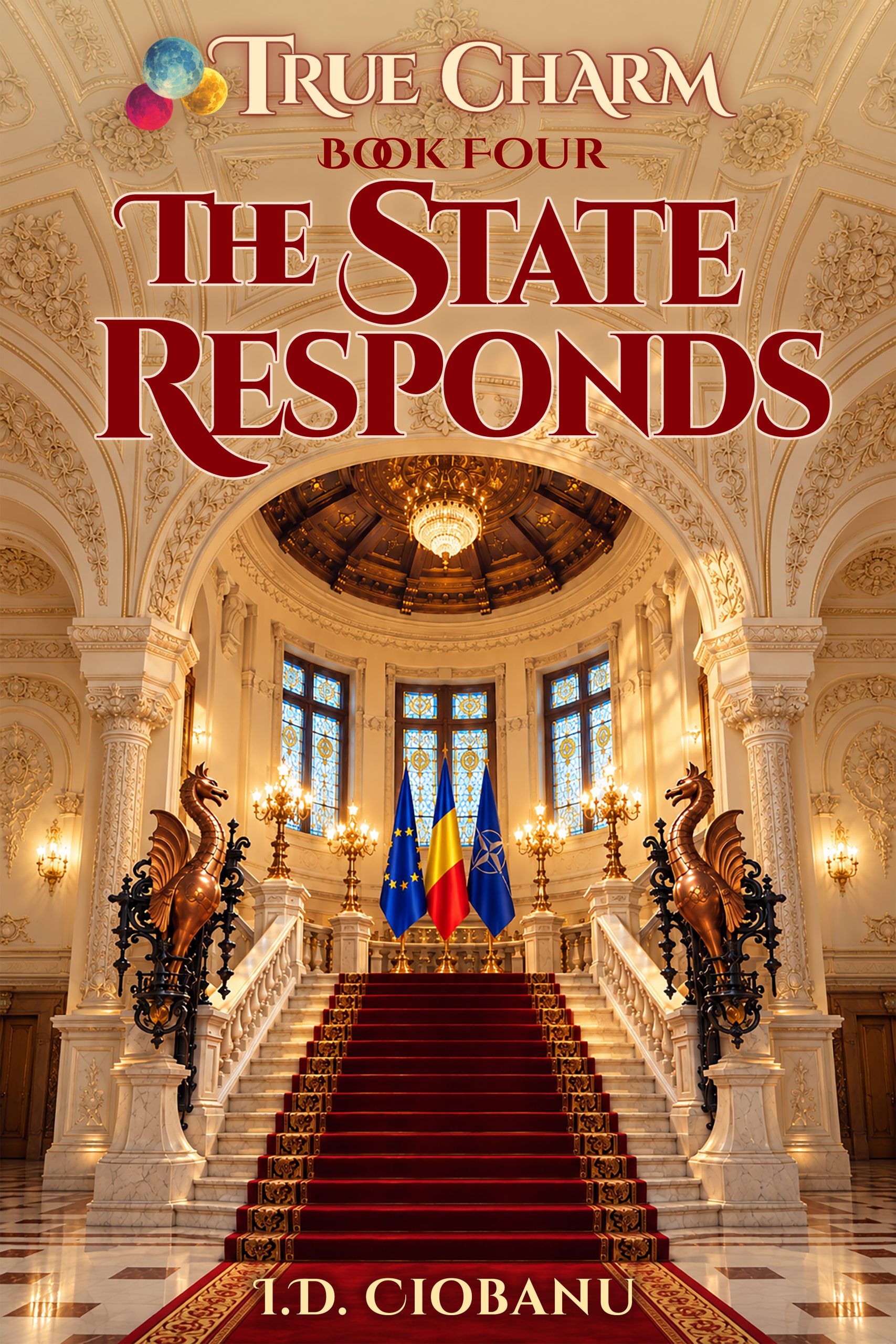
The State Responds
When evidence becomes responsibility
By The State Responds, the extraordinary has become too important to remain a private concern. Evidence drawn from Romania’s inherited traditions is beginning to pose questions squarely within the duties of government, and familiar institutions must consider matters their ordinary procedures were never designed to accommodate.
Briefings and political discussions matter because the decisions they lead to may affect an entire country. Scientists seek evidence, guardians of sacred traditions bring a different understanding, and public officials must consider sovereignty, security and public confidence. Their perspectives cannot simply be reconciled by good intentions; they must be brought into some workable relationship amid uncertainty.
The book never forgets that the country consists of people rather than institutions alone. Faith, doubt, humour and affection accompany the political difficulties, reminding us why the consequences matter. It is a gripping point in the saga, when something once remembered in legend becomes a responsibility that a modern state can no longer put aside.
When wonder arrives at the cabinet table
There is a wonderfully unsettling idea at the centre of The State Responds: what should sensible people in public office do when the evidence before them no longer fits the categories in which they were trained to think? The traditions that once lived in family memory now have to be discussed beside scientific findings, security obligations and the difficult language of public policy. Neither a laboratory report nor an ancient belief can, on its own, tell a government how to proceed.
That difficulty gives the book its political suspense. Briefings and discussions matter not because they are exercises in procedure, but because someone must eventually decide what can be disclosed, who needs protection and how far the authority of the state ought to reach. Against this serious background, the ordinary pleasures of Romanian life are all the more welcome. The affection, faith and humour that accompany the characters make the national questions personal without ever shrinking them to the size of a family argument.