


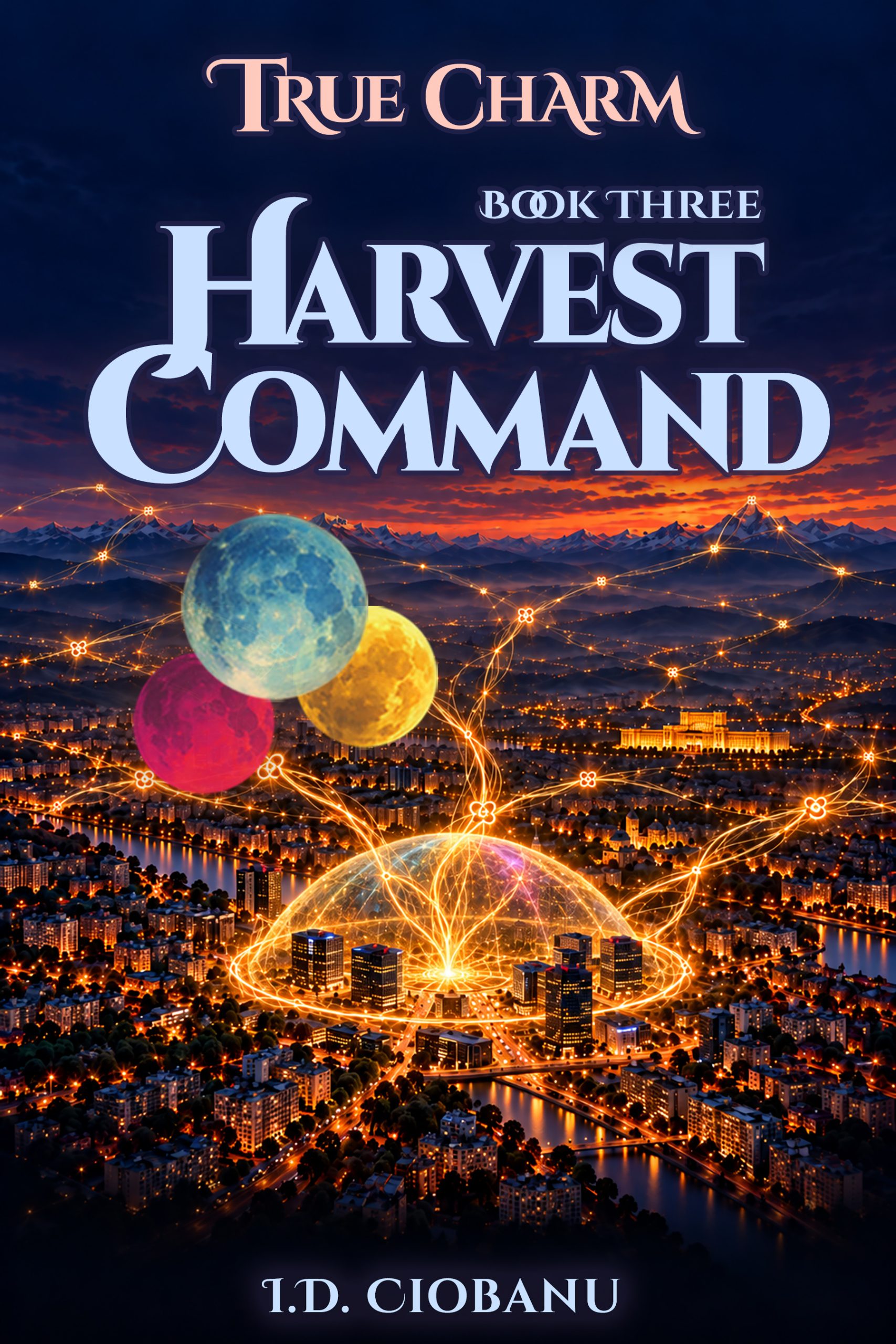
Harvest Command
A search with human consequences
There is a pleasing change of scale in Harvest Command. The questions that first emerged among families and researchers are no longer content to remain within familiar rooms. Clues must be followed through Romania’s social and geographical landscape, and the search begins to call for the sort of organisation that one might expect in an operation rather than a private enquiry. Science remains essential, although genealogies, local knowledge and the recollections of ordinary people can lead investigators somewhere no instrument would have suggested.
That widening effort gradually brings the apparatus of the state closer to the story. Once intelligence and security concerns enter the picture, the question of who knows what takes on a different character. It is one thing to discover an unusual inheritance; quite another to decide who may seek it, protect it or claim a right to act upon it. Even the most carefully designed operation must work with people who possess histories and attachments of their own, and who may not welcome being made part of someone else’s plan.
The novel finds a lively counterpoint to that seriousness in the pleasures of travel, flirtation, music and conversation. Its Romania is not merely territory to be searched, but a place whose culture gives meaning to what is being sought. The result is an increasingly purposeful thriller in which the excitement of finding answers sits beside the unease of realising how much power those answers might confer.
A search that changes its searchers
By Harvest Command, you can feel the story opening out across the country. The investigation has acquired purpose and organisation, but Romania’s inherited mysteries are hardly likely to yield to a tidy research programme. Genealogy and laboratory evidence offer promising leads; conversations and field encounters remind everyone that the people behind those leads may understand their own history rather differently. It is this meeting of method and lived experience that gives the search its fascination.
There is also a subtle but important shift in the balance of power. Once intelligence and security interests become involved, a discovery can no longer be considered solely in terms of what a scientist might learn from it. Questions of protection, authority and consent begin to accompany the fieldwork, adding a sharper edge to its momentum. Yet the novel still takes pleasure in a joke, a flirtation, a journey and the music of social life. The wider the operation becomes, the more important those human pleasures seem.