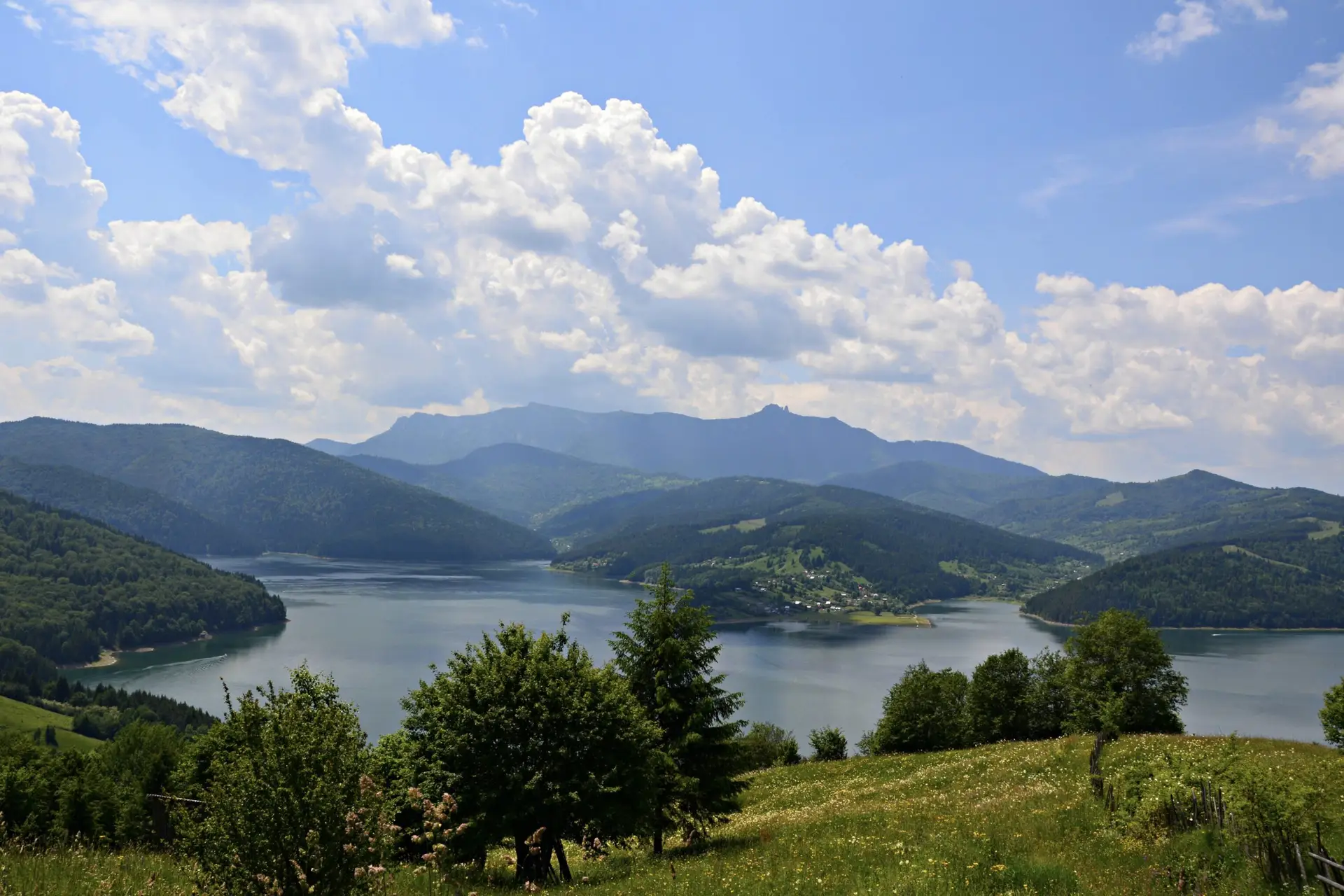
The valley before and after inundation
The dark water beside Ceahlău is the reservoir created by the Bicaz hydroelectric project on the Bistrița. The works of the 1950s required the forced relocation of communities across the valley. The National Village Museum records that 22 villages were affected and that more than 18,000 people had to abandon households destined to disappear beneath the future reservoir. Răpciuni was among the settlements lost or displaced.
For many families the move was literal dismantling. Houses were taken apart and rebuilt above the future waterline where possible. Churches, icons and household objects were moved when they could be saved. Cemeteries also had to be relocated before the water rose, turning the project into a removal not only of homes but of generations of burial places and remembered geography.
One particularly tangible survivor is the wooden Church of the Holy Archangels from Răpciuni, dated 1773. It was dismantled in 1958 and transferred to the National Village Museum in Bucharest before the reservoir covered the old village landscape.
The modern lake therefore carries two histories at once: a major Romanian hydroelectric project and the lived memory of the communities whose roads, fields, houses, churches and graves were moved or submerged to create it.
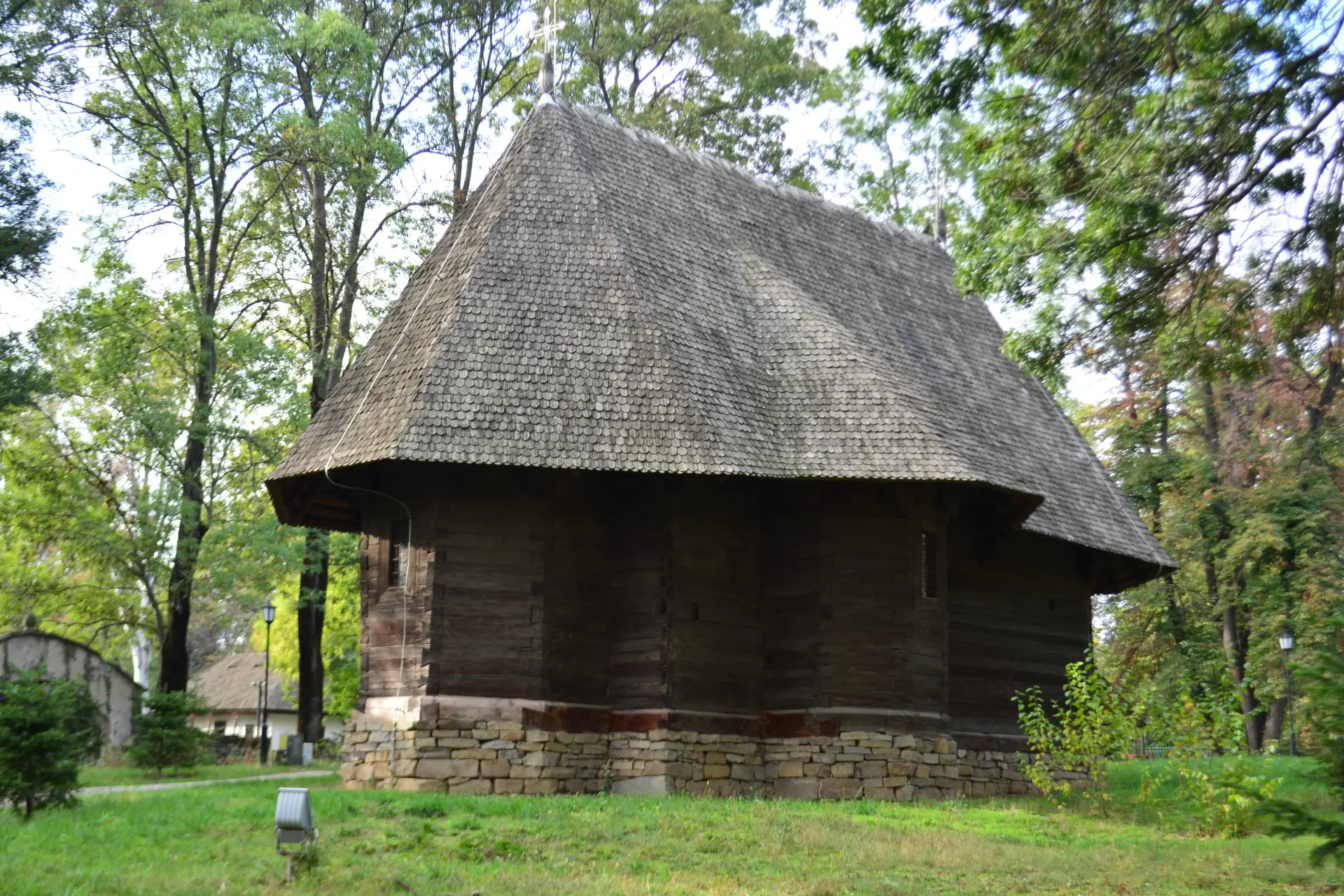
The wooden Church of the Holy Archangels, originally built in Răpciuni in 1773, survives at the National Village Museum in Bucharest. The building was taken apart in 1958 before its home valley was flooded and then reconstructed as a museum monument, preserving the timber church while removing it from its congregation.
Photograph: Joe Mabel, 9 October 2024 · CC BY-SA 4.0
Sources and further reading
Hangu before the reservoir
Before the Bicaz reservoir, Hangu and the nearby Bistrița Valley settlements had their own churches, schools, workshops and public gathering places. An archival photograph of villagers and workers outside the unfinished large church at Gura Hangului recalls the people and institutions of that community before the forced relocations of 1959–60.
The faces gathered around the church give a human scale to a history often told through engineering plans and reservoir maps. They preserve a glimpse of the busy village life that once filled the valley.
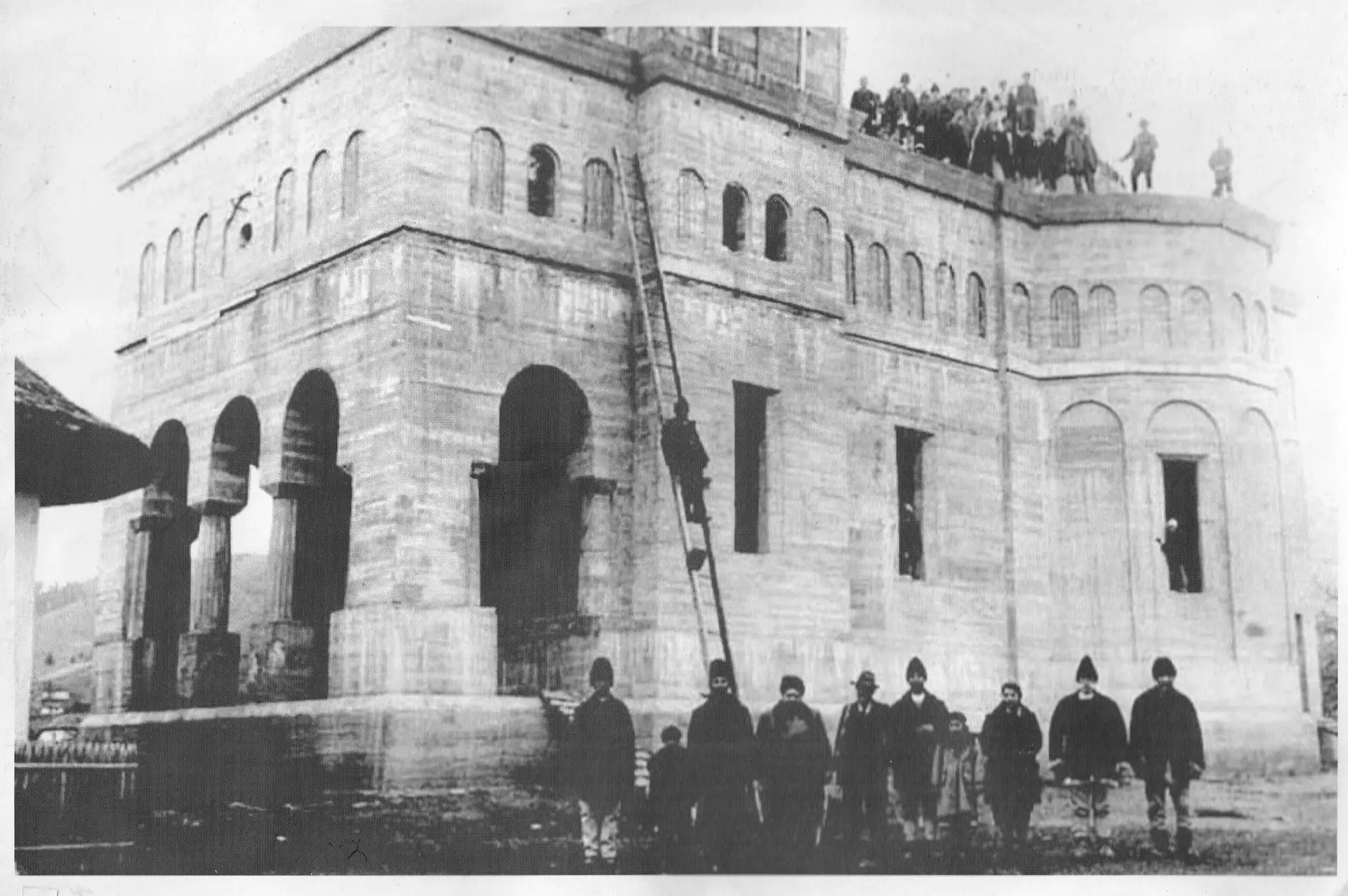
Villagers and builders gather beside the church at Gura Hangului, a glimpse of community life in the Bistrița Valley before construction of the Bicaz reservoir.
Historical photograph: Fundația Culturală Gavriil Galinescu collection / iMAGO Romaniae