

When the sky darkened above a Romanian village, the danger was rarely abstract. Hail could destroy a year’s harvest in minutes. A sudden flood might sweep away a bridge or isolate a household. Between prayers, weather signs and the hard labour of farming, people also told stories of mysterious men whose knowledge reached beyond ordinary clouds.
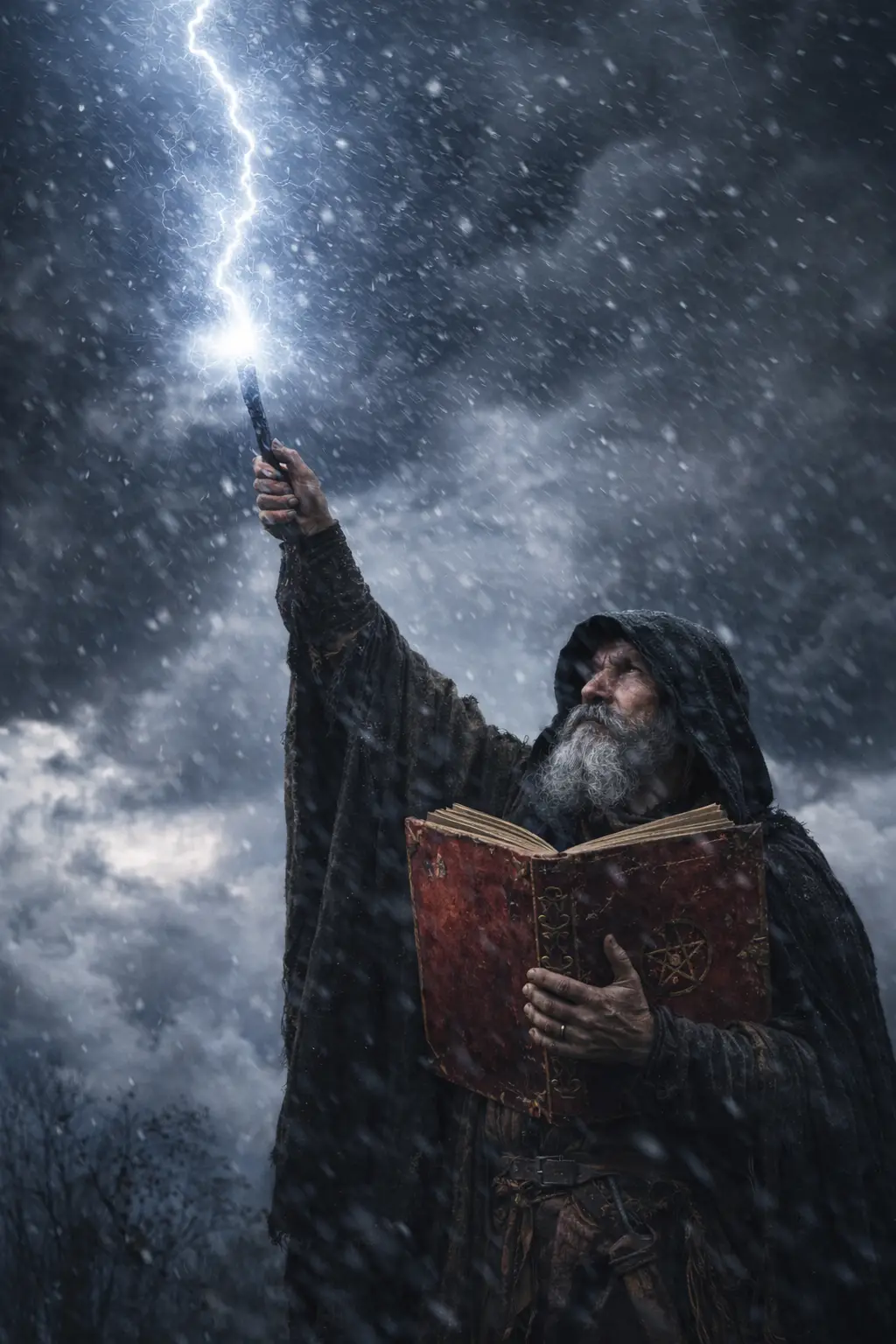
They were the solomonari: wandering masters of weather, often pictured in rough clothing, with strange books, an iron staff and a command of the balaur, the fantastic dragon or serpent of Romanian tradition. In different regions and tellings they could protect a community, punish an affront or bring an unwelcome storm. Their power was awe-inspiring precisely because the weather itself could be both blessing and ruin.
A village watched the clouds as carefully as it watched its fields.
Satul urmărea norii cu aceeași grijă cu care își privea ogoarele.
The wanderer no one quite recognises
In many accounts the solomonar arrives without ceremony. He might look like a poor traveller asking for food or shelter. Only later, when the clouds gather, does the household wonder whom it has welcomed or turned away. Such tales give an intimate moral edge to a vast natural power: hospitality to a stranger may matter as much as vigilance over the fields.
The details change from place to place. Sometimes he possesses a special book of learning; sometimes he carries a staff or other objects associated with his craft. This variety is part of the life of oral tradition, not a single fixed set of rules.
The balaur and the road through clouds
Among the most memorable images is the solomonar travelling upon a balaur. Unlike the dragons of modern fantasy, the creature belongs to a much older and more varied Romanian imaginative world. It may be serpentine, immense and closely bound to the storm itself. Rider and beast make visible the otherwise invisible passage of threatening weather across the mountains.
The image gives a dramatic shape to a familiar experience. A storm seems to have a direction, an intention and a voice; thunder announces its approach, and lightning briefly reveals the violence concealed in the clouds.
A school of hidden knowledge
One remarkable strand of tradition describes the solomonari as men trained in a hidden school beneath the earth. In some collected accounts the apprenticeship lasts seven years; pupils learn the languages of living creatures, the mysteries of nature and the means of directing storms. Some versions give the Devil the role of teacher, while other tellers grant the Solomonar a more benevolent place in God’s order.
The name invites association with Solomon, the biblical king renowned for wisdom, but scholars have also examined connections with the wandering scholar of Transylvanian tradition. These competing explanations speak to a figure who stands between learned knowledge, religious imagination and rural experience.
What the storms remembered
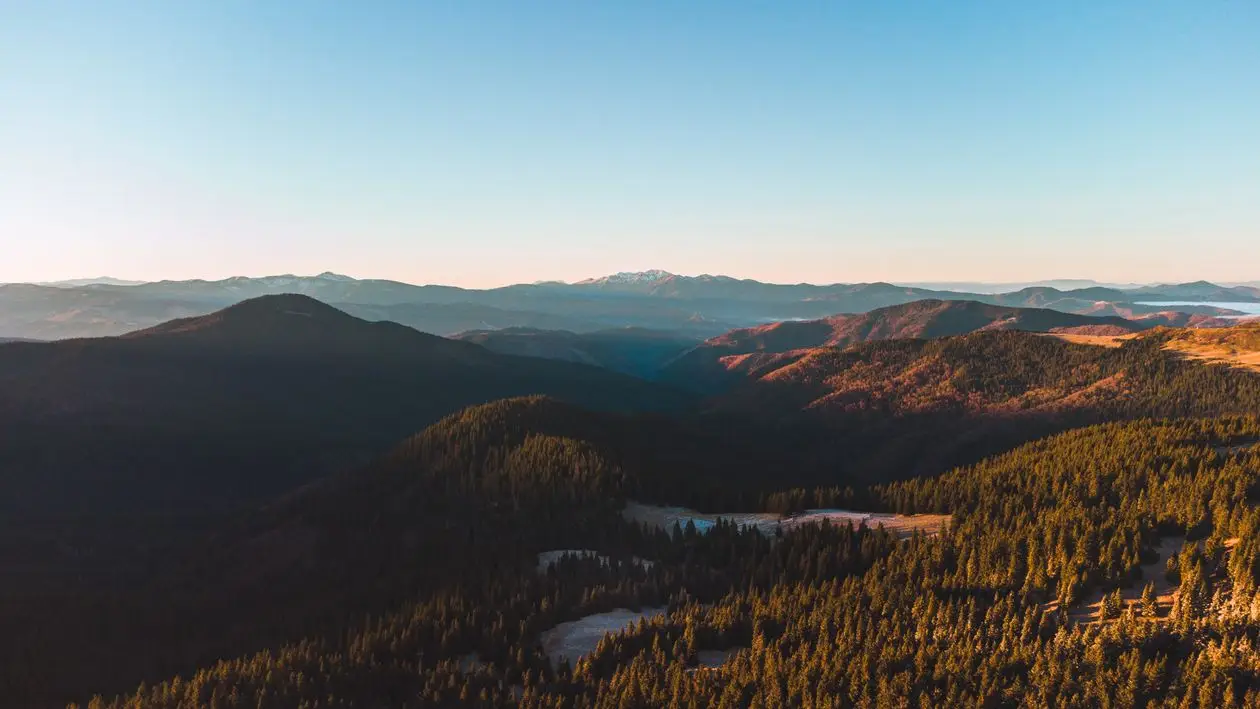
The solomonar belongs to a Romania of mountain passes, scattered farms and weather watched with anxious expertise. Folklore did not replace practical understanding: people knew the signs of a changing sky because their lives depended on them. Its stories gave the unpredictable a character with whom a village could bargain, quarrel or hope for mercy.
Traditional accounts also name pietrari or ghețari, defenders who sought to turn hail away from the fields, sometimes by ritual gestures with a scythe or protective words spoken at the village boundary. The storm thus became a contest between rival kinds of knowledge, with the ripening harvest at stake.
Today the solomonar endures as one of the country’s most vivid figures of weather lore. He reminds us that an approaching storm was never simply scenery. It could alter the fortunes of a family, a valley or an entire season.
In the saga
In True Charm, the old stories of the Solomonari offer a way of imagining weather, inheritance and the possibility that knowledge once dismissed as folklore may have a deeper history. The novel develops its own fictional interpretation; the accounts presented above belong to the wider Romanian storytelling tradition.
Sources and further reading
- Romulus Antonescu, Dicționar de simboluri și credințe tradiționale românești, entries on the solomonari and weather customs (CIMEC).
- Simona-Elena Catană (Copăcescu), ‘Solomonar’s Book and the Etymology of “Cloud Chasers”’, Journal of Romanian Literary Studies 27 (2021), pp. 629–636.
- Romanian dictionary and regional tradition summaries, including DEX and Maramureș testimony attributed to Pamfil Bilțiu.
Folklore accounts are regional and sometimes contradictory. This article brings them together for readers without treating any single variant as universal.